dung

Monday, October 18, 2010
Weekend
Every day I usually go to school. Saturday, I went to learn talk time class in Fair wood Library, and Sunday I went to Renton Library for reading books about two hours, I picked up some foods in the Supermarket, I made dinner, and enjoyed with my children. After that, I and my son went to Methodist Church in the Bronson way St near Group Health. I served food for 20 or sometimes 25 people at 9: p.m while my son practiced piano (he has liked to play piano when he was a kid). Although I didn't have spare time, I felt better and comfortable after weekend was very busy.

Tuesday, October 12, 2010
A Duty To Heal.
The story talk about a black person, he 's from Africa. He dreams to go the US. But, as soon as he came to US. He worked in a hospital. He was a doctor. He wanted to cure for everybody. He believed in his duty to heal. All patients, all human beings are equal. But one day when a patient was brought into the hospital. He was a white supremacist. He was a racist person. He didn't let anyone get close or touch him except the white nurses. He was not badly hurt.
What would you do when someone have adoubt with you? Doctor wonder: How could he have approached him? and win his trust? He was influenced with the faith of Martin Luther King everybody were equality and freedom. He had saved many lives.
What would you do when someone have adoubt with you? Doctor wonder: How could he have approached him? and win his trust? He was influenced with the faith of Martin Luther King everybody were equality and freedom. He had saved many lives.
Wednesday, September 29, 2010
The priceless lesson.

When I lived in my country. Life was hectic, I worked all day, every day I usually slept 5 or 6 hours. I couldn't visit my parents, I was very annoyed with myself. But I have a daughter. She was a teenager, she is active person. Every weekend, she visited my parents, she took care, bought some foods, gave them showers, cut their nails. She helped me so much in my life. This incident had me to realize I was wrong. Even though I had so many jobs (or so much work), but I couldn't forget my responsibility with my family. There are many who people who do not have a family.
Could I forget who bore me, raised me and help me? My daughter reminded me of who I am. And thank her for .
Could I forget who bore me, raised me and help me? My daughter reminded me of who I am. And thank her for .
Tuesday, September 28, 2010
A Priceless Lesson in Humility
Felipe Morales- Rowlett, Texas
As heard on NPR's All Things Considered, December 15, 2008
A few years ago, I took a sightseeing trip to Washington D.C. I saw many of our nation's treasures, and I also saw a lot of our fellow citizens on the street- unfortunate ones, like panhandlers and homeless folks.
Standing outside the Ronald Reagan Center, I heard a voice say, "Can you help me?" When I turned around, I saw an elderly blind woman with her had extended. In a natural reflex, I reached in to my pocket, pulled out all my loose change and placed it on her hand without even looking at her. I was annoyed at being bothered by a beggar.
But the blind woman smiled and said, "I don't want your money. I just need help finding the post office."
In an instant, I realized what I had done. I acted with prejudice-I judge another person simply for what I assumed she had to be.
I hated what I saw in myself. This incident re-awakened my core belief. It reaffirmed that I believe in humility, even though I'd lost it for a moment. The thing I had forgotten about myself is that I am an immigrant. I left Honduras and arrived in the U.S at the age 15. I started my new life with two suitcases, my brother and sister, and a strong no-nonsense mother. Through the years, I have been a dishwasher, roofer, cashier, mechanic, pizza delivery driver among many other humble jobs, and eventually I became a network engineer.
In my own life, I have experienced many open acts of prejudice. I remember a time at age 17, I was a busboy and I heard a father tell his little boy that if he did not do well in school, he would end up like me. I have also witnessed the same treatment of family and friends, so I know what it's like, and I should have known better
But now, living in my American middle-class lifestyle, it is too easy to forget my past, to forget who I am, where I have been and lose sight of where I want to be going. That blind woman on the streets of Washington, D.C., cured me of my self-induced blindness. She reminded me of my belief in humility and to always keep my eyes and heart open.
By the way, I helped that lady to the post office. And in writing this essay, I hope to thank her for the priceless lesson.
Network engineer Felipe Morales was born in Tegucigalpa, Honduras, in 1974, and immigrated with his family to Tampa, Fla., in 1990. He now lives with his wife and children in Rowlett, Texas, where he enjoys playing and coaching soccer.
Sunday, September 26, 2010
George Washington.
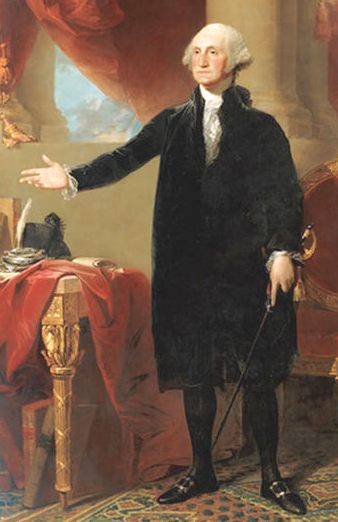
George Washington was born in Virginia on February 22, 1732. When George was 11, his father died. George did not go to school much, but he was good at math, he became a land surveryor. When he was 20, he joined the army.
In the 1750s, he fought in a war between France and Britain. In 1759, Washington married Martha Custis. They lived on Washington's plantation in Virginia, Mount Vernon. When he died, he freed his slaves.
In 1759 to 1774, Washington served in the government of Virginia. During this time, Britain made the colonists pay taxes. The taxes were unfair. So the representatives asked Britain to end the taxes. But Britain did not agree.
On April 19,1775. The colonists asked Washington to lead their army. He was a good leader.
In 1781. The United States became a free nation.
In 1787, representatives of 13 states met to write a constitution. They wrote the constitution of the United States.
Washington was the first president. He led the new United States in peace.
On December 12,1799, Washington died. He was 67 years old.
Friday, July 30, 2010

Susan B. Anthony (1820-1906)
Suffragist and women’s Rights Advocate
Susan Brownell Anthony fought for women’s rights
She was born on February 15,1820, in West Grove , near Adams Massachusetts.
She was the second of eight children. She was a precocious child, having learned to read and write at age three.
When she was seven years old, her family moved to New York. At that time economic depression.
Susan B. Anthony began teaching school when she was 15 years old. She taught school until she was 30 years old. She became headmistress of the Female Department.
She quit teaching and moved to the family farm in Rochester, New York. She began to take park in convention, and gathering related to the temperance.
She was a Quaker and was against people drinking alcohol.
Anthony was also against American Anti-Slavery Women’s Loyal League during the American.
When she was 31 years old she met Elizabeth Cady Stanton (1815-1902). Together they worked to change New York State laws that discriminated against women.
Anthony and Stanton believed that women should have the right to vote.
In 1869 they started the National woman Suffrage Association. The goal of this association was to help pass a constitutional amendment giving women the right to vote.
Susan B. Anthony was arrested in 1872 because she voted in a presidential election. She refused to pay the $100 fine.
Susan B. Anthony died on March13, 1906, and Elizabeth Cady Stanton on October 26, 1902. There were both 86 when they died.
The 19th Amendment was finally passed on August 18,1920.
Sunday, July 18, 2010
I love living in America.
My favorite is flowers. Washington has plenty of beautiful flowers. I like the landscape in Washington. I like to drive outside, there are a lot of flowers, green trees a long two side street, some rows of the beautiful houses, big village on the hill, schools, museums, libraries, parks, lakes...
And I also like to cooking foods America, but the tuition for cooking too expensive, so I go to library, I borrow some food books, I chose some foods easily cook which I felt it's delicious.
And I also like to cooking foods America, but the tuition for cooking too expensive, so I go to library, I borrow some food books, I chose some foods easily cook which I felt it's delicious.
Subscribe to:
Posts (Atom)